


Kerala Festivities: Vishu (Malayalam New Year) + Unniyappam
- Kanela Fina
- Apr 16, 2021
- 5 min read

Updated: Apr 24, 2022
I feel extremely blessed I've been given the chance to discover a part of the Indian culture. And especially, I'm happy I've gone beyond the clichés surrounding India and Indians. When your spouse comes from such a diverse and rich culture, there are always festivals, traditions, and mesmerising words that carry a long history.
Today, we celebrate the festival of Vishu which heralds the beginning of the Malayalee New Year. If anything, Indian festivals are a big thing. That's why, warming up to Vishu or Onam, and preparing traditional Kerala foods and rituals have become a lovely custom of our little family of two. It also makes me realise the importance of bringing cultures together.
The festival of Vishu is celebrated in Kerala and the adjoining areas of Tamil Nadu. Vishu day marks the Sun’s transit to the zodiac MeshaRashi as per the Indian Astrological calculations. Keralites celebrate Vishu every year on the first day of the Malayalam month of Medam that usually falls in the month of April. This year Vishu fell on April 14. Keralites celebrate Vishu with great fervor dressing up to the occasion with traditional white and gold sarees and mundhus, arranging kanikonna (Cassia fistula) flowers, and honouring Lord Krishna while setting a traditional Vishu Kani.

Early on Vishu day, at the auspicious hour (at dawn), children and family members are awakened and taken in front of the Vishu Kani. We'll make sure everybody's eyes are covered.. The reason we do that is because the sight of the shimmering kani is believed to herald a prosperous year. The Vishu Kani is "the first sight" we see, and it includes an assortment of the auspicious items first sighted on Vishu.


Golden colours are crucial, traditional items include a mirror, a lamp, gold, betel leafs, areca nuts, coins and notes, mangoes, banana, jackfruit, yellow lemons, yellow cucumber, rice, and paddy, and sculptures or pictures of Krishna.

We actually don't have framed pictures or sculptures of Krishna, so our kani was centered around Ganesh. It's important to note that none of these objects can directly touch the floor, so be mindful of placing a cloth, a blanket or carpet below. It is custom that the eldest woman in the house prepares the vishu kani the night before - I'm happy we are practicing already so by the time we have children I know my way around 😄


For traditional events such as Vishu, Onam or weddings, sadhyas (banquets) are served on a lovely banana leaf. Even more than 20 dishes might be served on banana leafs. People seat cross-legged on the floor and food is eaten with the right hand, without cutlery. Like other countries in Asia, the main dish is plain boiled rice, but here the rice is served along with curries and other starters.
Most sadhyas include:
pickles, chips and others: Sharkara Upperi, Nendran Chips, Mango Pickle, inji puli, and papadam.
Mains: Rice, parippu curry, sambar, rasam, moru curry
Sides: Kootu curry, Olan, beetroot or cabbage thoran, aviyal, kaya Mezhukupuratti, vendakka pachadi or cucumber kichadi.
Payasam: Semiya payasam, Parippu pradhaman, Palada payasam, Ada pradhaman, Chakka pradhaman, or Paal payasam
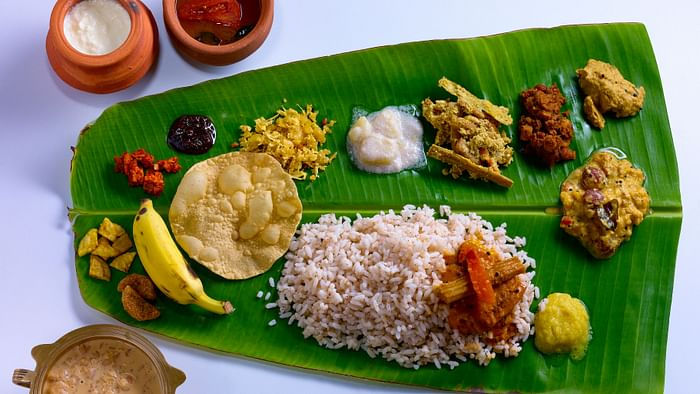
Because we are only two people we are not going to cook all the dishes mentioned above. So we pick from all the dishes and choose whatever we prefer. For Vishu 2021, we decided to include:
Snacks: banana chips, little bananas, unniyappam and pappadum
Pickle: inji thayiru
Side-dishes: cabbage thoran and aviyal
Ozhichu curry: parippu and sambar
Dessert: parippu pradhaman

Also, a little banana leaf with each of these foods is placed in front of the diety.
I have chosen to share the recipe of one of my husband's favourites sweet snacks: unniyappam. In Malayalam, "unni" means small, and "appam" means rice cake. It’s a must item on special occasions, and it's given as an offering in many temples in Kerala as Prasāda/Prasādam (food offered to Lord Krishna). Like many, many things in the Hindu belief, food offering to Krishna is auspicious, an action rooted and further explained in the Bhagavad-gita.
There's nothing not to love about unniyappam... Served along freshly brewed chai... Hmmm brace yourself for the most magical bite with notes of banana, coconut, cardamom, and oh-so-good mellow jaggery. This year, we acquired a cute takoyaki maker to make unniyappam. Otherwise, the dough can be deep-fried, but the shape won't be as round as traditional unniyappams.


Unniyappam
Ingredients
1 medium banana, ripe
2 cups rice flour
1/2 teaspoon salt
1/2 teaspoon baking powder
10 cardamom pods, ground to powder, or one generous tablespoon of cardamom powder
2 cups jaggery, melted
2/4 cup coconut chunks
1.5 tablespoons black sesame
2 cup water
1/2 cup Ghee* (See notes)
Optional:
Unniyappam or takoyaki pan**
Method
In a bowl, mix together the rice flour, salt, and baking powder.
Heat to medium-low a saucepan and add the jaggery. Melt the jaggery along 1 cup water.
Grind the cardamom pods and purée the banana. Incorporate the cardamom and the puré into the mixture and mix well.
Now add the jaggery: make sure you filter it to avoid any impurities. Keep whisking and adding progressively the remaining cup of water. The texture must resemble puré: it shouldn't be too thick nor too liquid. Make sure all the bites are well mixed.
In a pan, roast the black sesame. Reserve.
Use the same pan to roast the coconut chunks. Add two tablespoons of ghee and roast the coconut chunks to a light golden colour.
Add the roasted black sesame and the toasted coconut chunks into the unniyappam batter. Make sure all the bits are well mixed.
Reserve the batter for a couple of hours at room temperature or overnight in the fridge.
If your batter was in the fridge overnight, take it out half an hour before you start frying the unniyappam.
If using a unniyappam or takoyaki pan, heat it and add ghee. Be generous and fill half of the holes/cavities. Generously frying the batter in ghee will make our unniyappam specially soft - yes, it's a ridiculous amount of ghee but who's counting calories? :D
Pour the batter into each and every hole and fry until golden colour. Then, with a little spatula or raclette fork, turn the unniyappams upside down so they fry evenly.
Place the fried unniyappams in a plate with some kitchen paper. Serve the unniyappams with freshly brewed chai and enjoy!***
Notes
*Ideally, try using ghee (clarified butter), but butter and oil could be used instead.
**Unniyappams are traditionally rounded little balls, hence using a pan that includes that sort of mold is key. If you don't happen to have a unniyappam or takoyaki pan or similar, try using a deep casserole dish. The unniyappams will resemble little fritters but the flavour will be delicious!
***The quantities in this recipe made around 40 unniyappams, which were considerably small since we used a takoyaki pan. The final amount will vary depending on the dish you use to fry :)
Bon appétit!


Comments